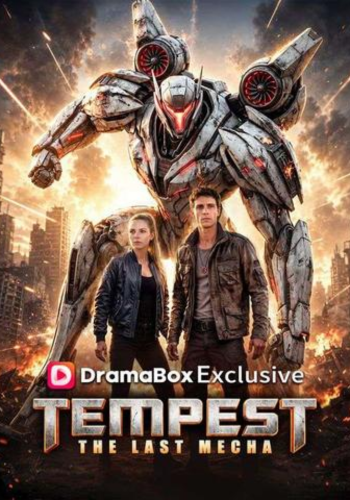

The last mecha standing. The last pilot who knows how to use it. The last line before everything falls.
Advertisements
Colt Thorne carries the weight of a war that may already be lost, and the machine that could turn it.
The title carries the premise in three words: the last mecha. In the science fiction tradition the series draws on, a mecha is a piloted combat machine, the kind of technology that turns a single trained operator into a force capable of altering the outcome of a battle. The word last is what gives the series its specific weight. This is not a story about a fleet of these machines or an army equipped with them. It is a story about the final one, the single remaining mecha in a world where the others have been destroyed, lost, or rendered inoperable, which means the survival of whatever the mecha is meant to protect rests on a single machine and the people who can operate it. The series builds its stakes on scarcity, on the understanding that there is no replacement for what Colt Thorne carries into battle.
Colt Thorne is the figure at the center of the series, the pilot whose connection to the last mecha defines the story's trajectory. The mecha genre has a long tradition of pairing a specific pilot with a specific machine, where the relationship between the human operator and the technology is not simply functional but personal, built on the understanding that the machine responds to its pilot in ways that cannot be transferred to anyone else. Colt's position as the operator of the last mecha places the burden of an entire conflict on a single person, which is the dramatic structure the genre uses to convert large-scale war into an intimate story about one individual's capacity to carry what cannot be shared.
Freya occupies a central position in the series alongside Colt, and the mecha genre typically uses a second major character in this position to provide the emotional and strategic counterweight to the pilot's burden. Whether as a fellow pilot, a strategic partner, an engineer who maintains the machine, or a figure whose relationship to Colt gives the war its personal stakes, Freya represents the human connection that the mecha genre uses to ground its technological spectacle in something the audience can invest in emotionally. The series develops the dynamic between Colt and Freya as part of what gives the conflict meaning beyond the mechanics of combat.
Beyrli is the third major figure the series builds its character structure around, and the presence of three central characters in a mecha drama typically signals a triangle of relationships, allegiances, or conflicts that the war forces into collision. The mecha genre frequently uses its supporting characters to represent the different stakes of a conflict: what is being fought for, what is being risked, and what the cost of the war means to the people closest to the pilot who carries it. Beyrli's role in that structure gives the series the relational complexity that distinguishes character-driven mecha drama from pure action spectacle.
The last mecha framing gives the series an inherent finality that shapes its emotional register. A story about the final machine of its kind is a story operating under the constant awareness that what is being protected cannot be protected again if it is lost. Every battle Colt enters carries the weight of irreplaceability. Every risk to the mecha is a risk to the last hope it represents. The series uses that finality to give its action sequences stakes beyond the immediate combat, because the destruction of the last mecha would not simply be a setback. It would be the end of the only thing standing between the world the series constructs and whatever force threatens it.
For DramaBox's 2026 catalog, Tempest: The Last Mecha represents the platform's investment in science fiction mecha drama, a genre that the vertical short drama format has explored less frequently than romance, revenge, and fantasy. The mecha genre's combination of large-scale action and intimate pilot-machine drama gives the series a distinct profile within DramaBox's offerings, appealing to an audience that the platform's romance-heavy catalog does not fully address. The series generated significant recap and breakdown activity across YouTube in the days following its release, with channels producing full-story explanations and episode-by-episode analysis, which reflects the kind of engagement that science fiction premises with detailed world-building tend to generate among viewers invested in understanding the full scope of the story.
Diana Foster is an entertainment writer specializing in action-romance hybrids and digital platform storytelling. With a background in genre fiction analysis, she covers the growing intersection of adrenaline-driven plots and romantic arcs in short-form series. Her reviews focus on pacing, production value, and what makes mobile-first content irresistible to global audiences.
The content on this page is published for informational and entertainment purposes only. All intellectual property rights associated with Tempest: The Last Mecha, including its story, characters, title, and all related creative elements, belong exclusively to the original production team and the DramaBox platform. Viewers who wish to watch the complete series are encouraged to access it through DramaBox's official website or mobile application on iOS and Android, where the production team receives proper attribution and compensation for their work. This site operates as an independent editorial platform for short drama audiences and holds no affiliation with DramaBox or any party involved in producing this title. All reviews and articles published on this site are free to read. No payment, subscription fees, or personal financial information are ever required to access our content. We do not host, stream, distribute, or store any copyrighted video material. Our purpose is to help audiences find quality short drama content through honest, specific critical writing. To watch the full series and support the people behind it, please visit DramaBox through their official channels.